Relational Database Fundamental
- Information stored in databases ( Database : info of objects, events, people and places).
- Database models include :
i) Hierarchical database model - organized into a tree like structure.

ii) Network database model - flexible way of representing objects and their relationships.
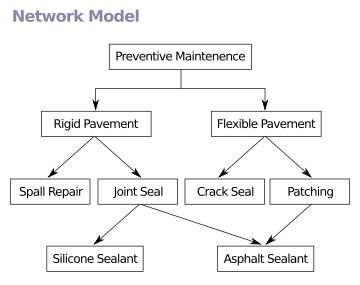
iii) Relational database - in the form of logically related two dimensional tables.

Entities and attributes
- Entity : a person, place thing, transaction or event about which information is stored.
- Attributes : characteristics or properties of an entity class.
Key and Relationships
- Primary Key : a field that uniquely identifies a given entity in a table.
- Foreign Key : a primary key of one table that appears an attribute in another table and
acts to provide a logical relationship among that two tables.
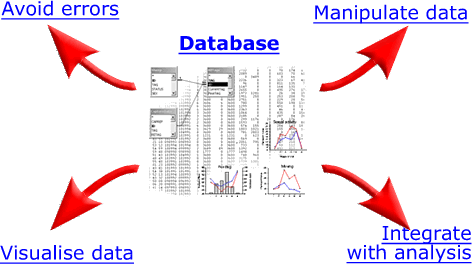
Relational Database Advantages :
- Increased flexibility
- Increased scalability and performance
- Reduced information redundancy
- Increased information integrity
- Increased information security
Database Management Systems
- software through which users and application programs interact with a database.

Data-Driven Web Sites
- An interactive web site that kept constantly updated and relevant to the customers needs.
Data-Driven Web Site Business Advantages :
- Development
- Content management
- Future expandability
- Minimizing human error
- Cutting production and update costs
- More efficient
- Improved stability
Integrating information among multiple database
- Integration : allows separate systems to communicate directly with each other.
> Forward Integration
- Takes information and sends to all downstream systems and processes.
> Backward Integration
- Takes information and sends to all upstream system and processes.
Central repository for integrated information


No comments:
Post a Comment