Thursday, March 3, 2016

CHAPTER 12 : INTEGRATING THE ORGANIZATION FROM END O END - ENTERPRISE RESOURCE PLANNING


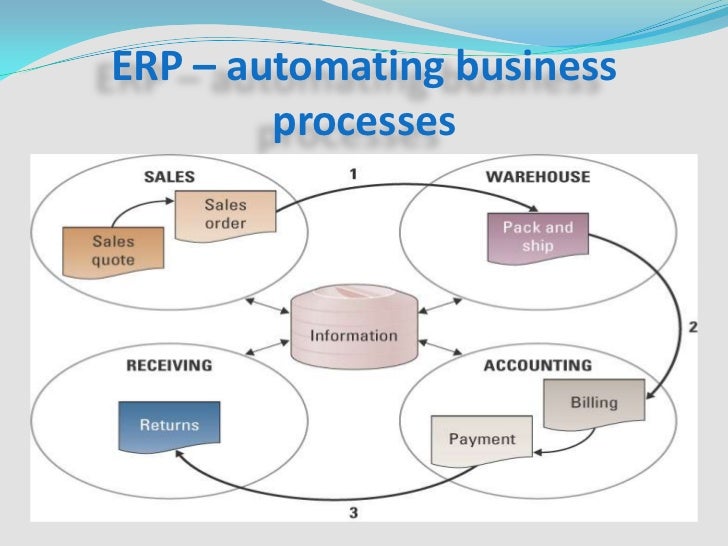
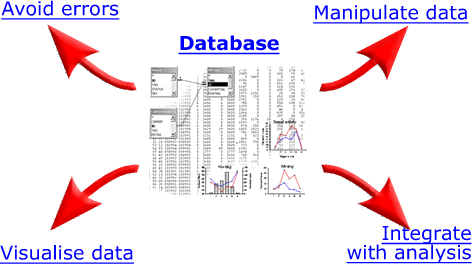
At the heart of all ERP systems is a database, when a user enters or updates information in one module, it is immediately and automatically updated throughout the entire system.


WHEN ONE IS UPDATE, THE REST WILL AUTOMATICALLY UPDATED.


INTEGRATING SCM, CRM AND ERP

  • Those are the backbone of e-business.
  • Integration of these application is the key to success for many companies.
  • Integration allows the unlocking of information to make it available to any user.
  • General audience and purpose of SCM, CRM and ERP.


INTEGRATION TOOLS

  • Middleware - several different types of software which sit in the middle of and provide connectivity between two or more software applications.
  • Enterprise Application Integration (EAI) Middleware - packages together commonly used functionality which reduced the time necessary to develop solutions.
ERP system must integrate various organization processes and be :
     - Flexible
     - Modular and open.
     - Comprehensive.
     - Beyond the company.

ERP SOLUTIONS ARE GROWING BECAUSE :

  • ERP is a logical solution to the mess of incompatible applications.
  • ERP addresses the need for global information sharing and reporting.
  • ERP used to avoid the pain and expense of fixing legacy systems.


Saturday, February 27, 2016

CHAPTER 11 - CUSTOMER RELATIONSHIP MANAGEMENT


CRM enables an organization to :

  • Provide better customer service.
  • make call centers more efficient.
  • help sales staff close deals faster.
  • increase customer revenues.
  • discover new customers.
RECENCY, FREQUENCY AND MONETARY VALUE (RFM)
How recently a customer purchased items is called as recency.
How frequently a customers purchased items is a frequency.

How much customer spends on each purchase is monetary value.


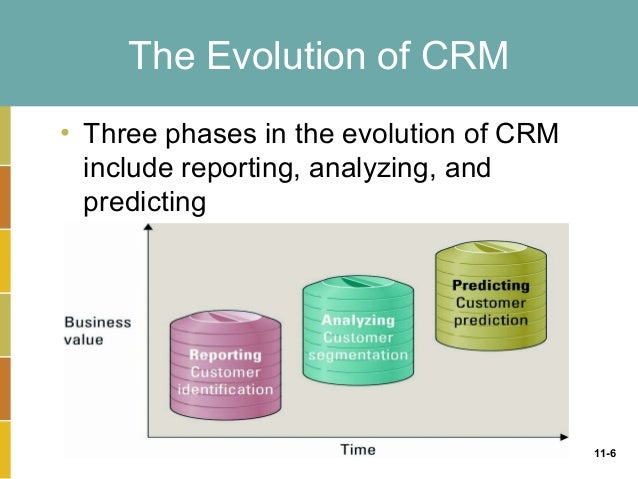
  • CRM reporting technologies helps organization identify their customers across other application.
  • CRM analysis technologies help organization segment their customers into categories.
  • CRM predicting technologies help organizations make prediction regarding customer behavior.
CRM EXPLOSIVE GROWTH


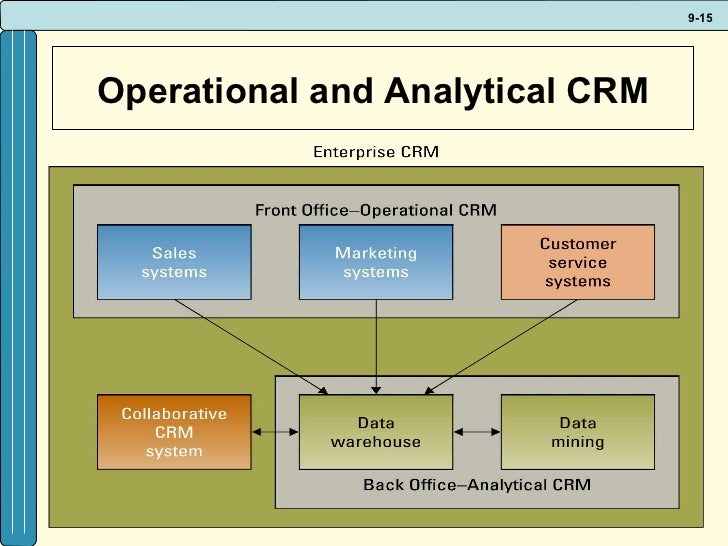
  • OPERATIONAL CRM : Support traditional transaction processing for day-to-day FRONT OFFICE operations.
  • ANALYTICAL CRM : Support BACK OFFICE operations and strategic analysis and includes all system that do not deal directly with the customers.

CRM SUCCESS FACTORS :

  1.  Clearly communicate the CRM strategy.
  2.  Define information needs and flow.
  3.  Build an integrated view of the customer.
  4.  Implement in iterations.
  5.  Scalability for organizational growth.


Friday, February 26, 2016

CHAPTER 10 - EXTENDING THE ORGANIZATION (SUPPLY CHAIN MANAGEMENT)


In the previous chapter we already learn about Supply Chain, but in this chapter it tells us about relationship decision making and SCM. Next, it will shows how IT driving supply chain that resulting a changed and the success of SCM and theirs stories.


BASIC SUPPLY CHAIN


The supply chain has three main links : 

1) Materials flow from suppliers and their “upstream” suppliers at all levels.

2) Transformation of materials into semi-finished and finished products through the organization;s own production process.

3) Distribution of products to customers and their “downstream” customers at all levels.


INFORMATION TECHNOLOGY'S ROLE IN THE SUPPLY CHAIN


FACTORS DRIVING SCM

  • VISIBILITY
         - Supply Chain Management is the ability to view all areas up & down the supply chain.
         - Bullwhip Effect occurs when distorted product demand information passes from one entity to               the next throughout the supply chain. 
  • CONSUMER BEHAVIOR :
        - companies can respond faster and more effectively to consumer demands through supply chain           enhances.
         - Demand Planning Software generates demand forecast using statistical tools.
  • COMPETITION :
        - Supply Chain Planning (SCP) Software uses advanced mathematical algorithms to improve the           flow and efficiency of the supply chain.
        - Supply Chain Execution (SCE) Software automates the different steps and stages of the supply           chain.

  • SPEED : There are the factors that fostering speed 


SCM SUCCESS FACTORS

SCM industry best practices include :
  1. make the sale to suppliers.
  2. wean employees off traditional business practices.
  3. ensure the SCM system supports the organizational goals.
  4. be future oriented.

SCM SUCCESS STORIES


TOP REASONS WHY MORE EXECUTIVES ARE TURNING TO SCM

  • Numerous decision support system (DSSs) are being built to assist decision makers.
  • DSSs allow managers to examine performance and relationship over the supply chain and among the suppliers, manufacturers, distributors and other factors that optimize supply chain performance.


Wednesday, February 10, 2016

CHAPTER 9 – ENABLING THE ORGANIZATION-DECISION MAKING


   Decision Making 
Ø  Reasons for Growth of Decision Making Information System
-          People need to analyze large amounts of information – Improvements in technology itself, innovations in communication, 
and globalization have resulted in a dramatic increase in the alternatives and dimensions people need to consider when making a decision or appraising an opportunity
-          People must make decisions quickly – Time is of the essence and people simply do not have time to sift through all the information manually
-          People must apply sophisticated analysis techniques, such as modeling and forecasting, to  make good decisions – Information systems substantially reduce the time required to perform these sophisticated analysis techniques
-          People must protect the corporate asset of organizational information – Information systems offer the security required to ensure organizational information remains safe.
Ø  Model – A simplified representation or abstraction of reality


Ø   IT systems in an enterprise


Transaction Processing System
Ø  Moving up through the organizational pyramid users move from requiring transactional
 information to analytical information


Ø  Transaction processing system – the basic business system that serves the operational level (analysis) in an organization

Ø  Online transaction processing (OLTP) – the capturing of transaction and event information using technology to (1) process the 
information according to defined business rules, (2) store the information, (3) update 
existing information to reflect the new information

Ø  Online analytical processing (OLAP) – the manipulation of information to create business intelligence in support of strategic 
decision making

Decision support systems

Ø  Decision support system (DSS) – models information to support managers and business professionals during the
 decision-making process

Ø  Three quantitative models used by DSSs include;

1.       Sensitivity analysis – the study of the impact that changes in one (or more) parts of the model have on other 
parts of the model
2.       What-if analysis – checks the impact of a change in an assumption on the proposed solution
3.       Goal-seeking analysis – finds the inputs necessary to achieve a goal such as a desired level of outputs


 What-if analysis


Goal-seeking analysis


Executive information system 

Ø  Executive information system (EIS) – A specialized DSS that supports senior level executives within the organization

Ø  Most EISs offering the following capabilities;
-          Consolidation – involves the aggregation of information and features simple 
roll-ups to complex groupings of interrelated information

-          Drill-down – enables users to get details, and details of information
-          Slice-and-dice – looks at information from different perspectives


Ø  Interaction between a TPS and an EIS


Ø  Interaction between a TPS and a DSS


Ø  Digital dashboard – integrates information from multiple components and presents it in a united display
Artificial intelligence (AI)

Ø  The ultimate goal of AI is the ability to build a system that can mimic human intelligence

Ø  Intelligent system – various commercial applications of artificial intelligence

Ø  Artificial intelligence (AI) – simulates human intelligence such as the ability to reason and learn


Ø  Four most common categories of AI include;
1.       Expert system – computerized advisory programs that imitate the reasoning processes of experts in solving 
difficult problems
2.       Neural network – attempts to emulate the way the human brain works
o   Fuzzy logic – a mathematical method of handling imprecise or subjective information
3.       Genetic algorithm – an artificial intelligent system that mimics the evolutionary, survival-of-the-fittest process to generate increasingly better solutions to a problem
4.       Intelligent agent – special-purposed knowledge-based information system that accomplishes specific tasks on behalf of its users


Data Mining
Ø  Data-mining software includes many forms of AI such as neutral networks and expert systems

Sunday, February 7, 2016

CHAPTER 8 – ACCESSING ORGANIZATIONAL INFORMATION – DATA WAREHOUSE

Data warehouse fundamentals

Ø  Data warehouse – A logical collection of information – gathered from many different operational databases – that supports business analysis activities and decision-making takes
Ø  The primary purpose of a data warehouse is to combined information throughout an 
organization into a single repository for decision-making 
purposes – data warehouse support only analytical processing
Data warehouse model
Ø  Extraction, transformation and loading (ETL) – A process that extracts information from internal and external databases, transforms the
 information using a common set of enterprise definitions, and loads the information into a data
 warehouse.
Ø  Data warehouse then send subsets of the information to data mart.

Ø  Data mart – contains a subset of data warehouse information.


Multidimensional Analysis and Data Mining 
Ø  Relational Database contains information in a series of two-dimensional tables.
Ø  In a data warehouse and data mart, information is multidimensional, it contains layers of 
columns and rows

-          Dimension – A particular attribute of information


Cube – common term for the representation of multidimensional information


    Once a cube of information is created, users can begin to slice and dice the cube to drill down into the information.

Ø  Users can analyze information in a number of different ways and with number of different dimensions.

Ø  Data Mining  -the process of analyzing data to extract information not offered by the raw data alone.
 Also known as “knowledge discovery” – computer-assisted tools and techniques for sifting through and analyzing vast
 data stores in order to finds trends, patterns and correlations that can guide
 decision making and increase understanding
Ø  To perform data mining users need data-mining tools

-          Data-mining tool – uses a variety of techniques to finds patterns and relationships in large volumes of information. Eg: retailers and use knowledge of these patterns to improve the placement of items in the layout of a mail-order catalog page or Web page.
Information Cleansing or Scrubbing
Ø  An organization must maintain high-quality data in the data warehouse
Ø  Information cleansing or scrubbing – A process that weeds out and fixes or discards inconsistent, incorrect or incomplete information
Ø  Occurs during ETL process and second on the information once if is in the data warehouse
Ø  Contract information in an operational system
Ø  Standardizing Customer  name from Operational Systems
Ø  Information cleansing activities
-          Missing Records or Attributes
-          Redundant Records
-          Missing Keys or Other Required Data
-          Erroneous Relationships or References
-          Inaccurate Data

Accurate and complete information

Business Intelligence 
Ø  Business Intelligence – refers to applications and technologies that are used to gather, provides access, analyze data and information to support decision making efforts
Ø  These systems will illustrate business intelligence in the areas of customer profiling, customer support, market research, market segmentation, product profitability, statistical analysis, and inventory and distribution analysis to name a few
Ø  Eg; Excel, Access


Saturday, February 6, 2016

CHAPTER 7 - STORING ORGANIZATIONAL INFORMATION - DATABASE

Relational Database Fundamental

- Information stored in databases ( Database : info of objects, events, people and places).

- Database models include :

i) Hierarchical database model - organized into a tree like structure.


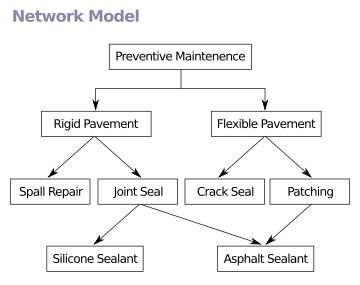
ii) Network database model - flexible way of representing objects and their relationships.


iii) Relational database - in the form of logically related two dimensional tables.


Entities and attributes

- Entity : a person, place thing, transaction or event about which information is stored.
- Attributes : characteristics or properties of an entity class.


Key and Relationships

- Primary Key : a field that uniquely identifies a given entity in a table.
- Foreign Key : a primary key of one table that appears an attribute in another table and
 acts  to provide a logical relationship among that two tables.


Relational Database Advantages :
- Increased flexibility
- Increased scalability and performance
- Reduced information redundancy
- Increased information integrity
- Increased information security


Database Management Systems
- software through which users and application programs interact with a database.

Data-Driven Web Sites 

- An interactive web site that kept constantly updated and relevant to the customers needs.
Data-Driven Web Site Business Advantages :
- Development 
- Content management
- Future expandability
- Minimizing human error 
- Cutting production and update costs
- More efficient 
- Improved stability


Integrating information among multiple database

- Integration :  allows separate systems to communicate  directly with each other.

> Forward Integration
- Takes information and sends to all downstream systems and processes.

> Backward Integration 
- Takes information and sends to all upstream system and processes.

Central repository for integrated information