
- To survive thrive an organization must create a competitive advantage
- Competitive advantages - A product or service that an organization's customers place a greater value on than similar offerings from a competitors.
- First-mover advantage - Occurs when an organization can significantly impact its market share by being first to market with a competitive advantage.
- Organizations watch their competition through environmental scanning
Five Forces Model
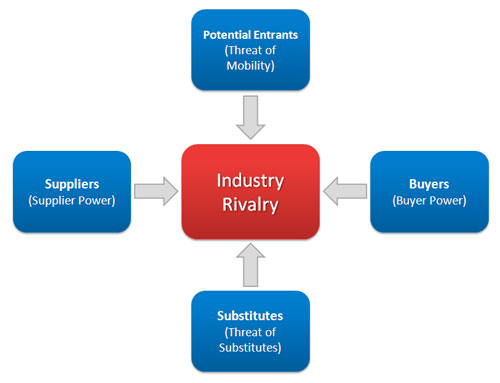
Buyer Power
- Its high when buyers have many choices of whom to buy from and low when their choices are few.
to reduce buyer power
- Loyalty program - Reward customers based on the amount of business they do.
- Switching costs - Costs that can make customers reluctant to switch to another product or service.
- Its high when buyer have few choices of whom to buy from and low when their choices are many.

Organizations that are buying goods and service in the supply chain can create a competitive advantages.
Threat of Substitute Products or Service
- Its high when there are many alternatives to a product or service and low when there are few alternatives.
- Switching costs - costs that can make customers reluctant to switch to another product or service.
Treat of New Entrants
- Its high when it is easy for new competitors to enter a market and low when there are significant entry barriers to entering a market.
- Entry barrier - a product or service feature that customers have come to expect from organization.
Rivalry among Existing Competitors
- Its high when competition is fierce in a market and low when competition is more complacent.
The three generic strategies

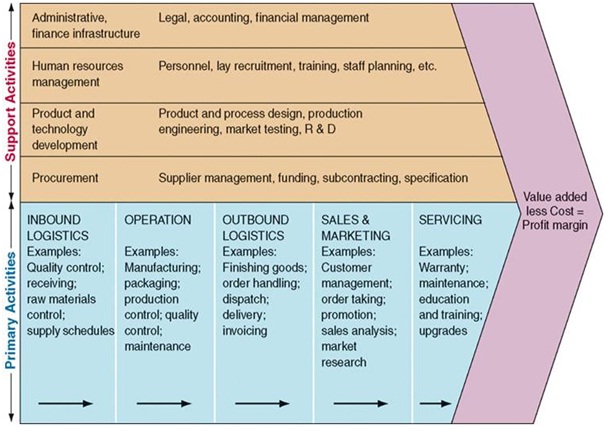
-Value Chain

- Value Creation

No comments:
Post a Comment